




Closing a Congregation
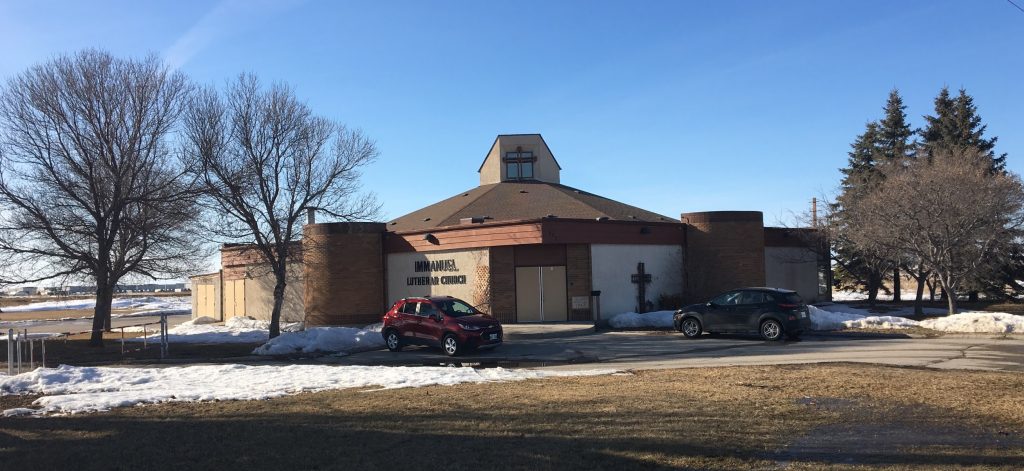
Immanuel Lutheran Church in Winnipeg
by David Haberstock
“For everything there is a season, and a time for everything under heaven. a time to be born, and a time to die;… a time to weep, and a time to laugh; a time to mourn, and a time to dance…” —Ecclesiastes 3:1-2, 4
Congregations are born. They also die. Even some of the great churches St. Paul planted and wrote letters to are no longer around today. And so it is with us. Our congregations eventually come to an end, just as towns and communities have ups and downs, births and deaths.
At the moment, the whole world is facing a great demographic decline which will impact our populations and institutions. Canada’s birthrate is well below replacement levels, and our population is only growing due to immigration. Should a great crisis—like that which occurred between 1929-1946—occur, all the current trends and social order could be rewritten. And the Lord is the one in charge of such things. But barring such an event, our country’s current trend is general decline.
All of society is thus grappling with the effects of being short-staffed and overstretched—especially in the fields of healthcare and eldercare. This also impacts the church as we struggle to send students to seminary, and congregations decline. Many of the students in our seminaries are not those born and bred in our congregations but rather believers from abroad! The Lord is in charge of growth and decrease in His Church and He knows what He’s doing, but we are not immune to societal trends and need to be aware of them. One implication is that the closing of congregations is becoming a more common occurrence.
What happens in the rite for closing a church building? And how do such rites help us say goodbye?
On September 7, 2025, we observed the closing of the mother church of Central Region: Immanuel Lutheran in Winnipeg. A service of “Closing of a Congregation and Disposition of the Building” is a lot like a funeral. It is a time to mourn and a time to give thanks. We thank God for how He has served us in Word and Sacrament, meeting with us week after week in that place. But it is also an ending, a time to mourn the passing of a beloved friend through whom the Lord has blessed us.
When you mourn, you have three major needs: 1) to officially say goodbye; 2) to be comforted by our Lord’s victory over death and His promises to us; and 3) to rejoice in the good we have received from God through the deceased. This happens in death by 1) the laying of the loved one’s body to rest; 2) a graveside or church service in which the promises of the Lord are declared; and 3) a wake or family gathering to remember the blessings received through the deceased. This happens at the closing service of a congregation by 1) the rite of closing a congregation and building; 2) the last Divine Service in the congregation; 3) a history of the congregation being read and social gatherings after the service.
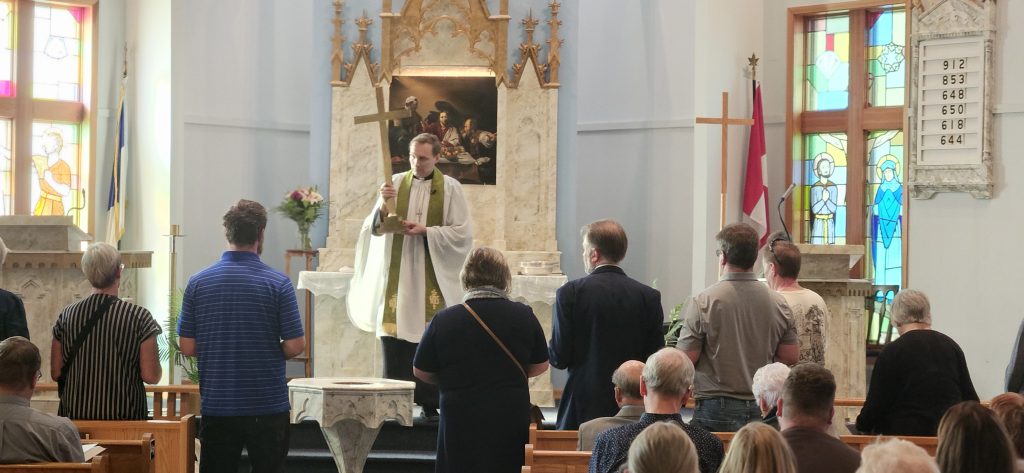
LCC Central Regional Pastor David Haberstock leads the rite of deconsecration while bearers stand ready to receive items.
What happens in the rite for closing a church building? And how do such rites help us say goodbye? The rite starts after the distribution of Holy Communion in the Divine Service. The chairman or secretary reads the motion passed by the congregation to close the congregation. The Regional Pastor addresses those gathered by acknowledging how many years the congregation has been there, encouraging them to thank God for His good gifts over those years, and to cling to Him in the days ahead. After prayer, a brief history is read, and the record books—baptisms, confirmations, marriages, funerals, and so forth—are entrusted to the Regional Pastor, on behalf of the broader church, for safekeeping.
I encouraged the congregation gathered that day that they give ear to the Word and seek out new pulpits and altars at which to receive Jesus’ Word. He who has ears to hear, let him hear. Find a new pastor, a new preacher. For though that pulpit was closing, there are several more pulpits in Winnipeg, and the Word of the Lord endures.
When the building is being closed as a sacred space—one designated for the pure proclamation of the Gospel and right administration of the Sacraments—a special rite and ceremony of deconsecration occurs next. It starts with Scripture and prayer, and then members of the congregation come forward to receive various symbolic items used in the Divine Service of the Lord’s House. The Regional Pastor goes to each piece of sacred furniture (font, lectern, pulpit, altar, and so forth) and reads a Scripture verse related to what happens there. Then portable items from each location are removed and handed to a member to carry out. From the font, for example, the bowl, the shell, and the Paschal candle are removed. At the lectern, the vestment and Lectionary book are removed. The individuals carrying these items then step to the side, waiting for other items to be removed.
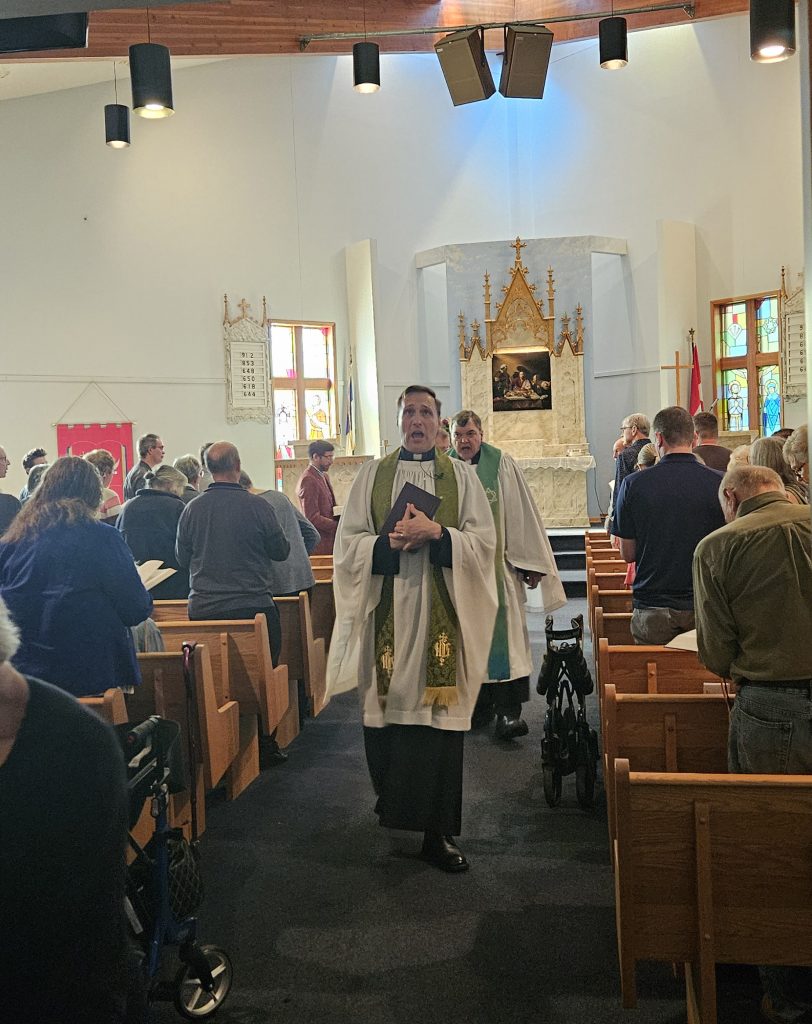
Regional Pastor Haberstock and Central District President Emeritus Thomas Prachar process out.
As the chancel is stripped of her adornments, the impact is much like the stripping of the altar on Holy Thursday. Once the chancel is suitably decommissioned and deconsecrated, the bearers of those items process out while the congregation sings a closing hymn, such as “The Church’s One Foundation.” The congregation follows out the doors of the sanctuary into the narthex or outside. Once outside, the Regional Pastor closes the sanctuary doors and closes the congregation in the name of the Father and of the Son and of the Holy Spirit, and the final blessing is received.
Afterward, a supper or social often occurs where the blessings of the Lord in that place through His servants are remembered. For the congregation in attendance at Immanuel’s closing, it was both a sad and joyous occasion—just as the funeral service of a devoted saint in your parish is full of sadness and joy. At such funerals, Christians confess their faith and sing our Lord’s praises with gusto, and the promises of God in Jesus Christ are received with joy. We celebrate our loved one and commend them to the Lord, knowing we will see them again. Joy and sadness mixed together.
So it was at Immanuel’s closing. The church was full. The singing was full-throated. The communion rail had descendants and pastors of the congregation in full number. It was like a home coming or family reunion—but one tinged with the sadness of saying goodbye and thanking the Lord for His gifts in that place. When the last worshippers departed, the doors were closed, and the final blessing pronounced, there was a finality that settled over us.
We are now in the process of finalizing the sale of the building, transferring members to other Lutheran Church–Canada congregations, and finding homes for the hymnals, resources, stained glass windows, and sacred furniture of the congregation. It is akin to the family and executors dispensing with the family home and the estate of the deceased. Each step is a sadness, but also one step towards closure and moving on.
I encouraged the congregation gathered that day that they give ear to the Word and seek out new pulpits and altars at which to receive Jesus’ Word. He who has ears to hear, let him hear. Find a new pastor, a new preacher. For though that pulpit was closing, there are several more pulpits in Winnipeg, and the Word of the Lord endures.
—————
Rev. David Haberstock is Lutheran Church–Canada’s Central Regional Pastor.
 LCC Facebook
 LCC Instagram