

Honouring Your Spiritual Father and Mother
When a congregation closes and buildings are relinquished, it can feel like an ending. Yet in the life of Christ’s Church, even such moments can become acts of faithful stewardship. Across our synod, congregations have left lasting legacies through financial gifts and resources that will continue to support ministry, missions, and proclamation for years to come; they are testimonies of faith and trust that God’s mission extends beyond any one place or generation. Rev. David Haberstock’s reflection that follows invites us into the tender and sacred work of closing a congregation’s physical chapter—and the hope that God brings forth from it.
Rev. David Haberstock’s reflection:
Closing a church and vacating the property is a lot like selling your mom and dad’s home after they die.
Recently, I assisted the former members of Immanuel Winnipeg in moving out of their church home. In the last while, I’ve re-homed 50 Lutheran Service Books to Aurora Lutheran Bible Camp, 50 to Beautiful Saviour Lutheran School, and another 60 to other parishes and people. I’ve helped Redeemer Winnipeg move collapsable tables and chairs to their facility. And Matt Honey and my son James and I moved leaded glass windows, furniture, font, candles, paraments, Bibles, bookshelves, and anything else we could make use of to Lutheran Church–Canada’s (LCC) synodical office, our house, Beautiful Saviour School, and other places, on top of what the parishioners have done.
Seeing all the things accrued in a church over a lifetime of ministry is overwhelming. It all needs to be sifted, sorted, moved, repurposed, donated, and sometimes thrown away or abandoned. Like going through your parents’ home, there are so many memories, feelings, and emotions—about how dad built this, or mom made that, the gatherings the family shared, and a desire to honour your parents. Or, in this case, your spiritual parents.
Even though every other congregation has an altar and other essential furnishings, I wanted to save the beautiful wooden altar, pulpit, and lectern that were from Immanuel’s earlier building that burnt in 1984. They were installed (along with the font) in their 1985 building. Around 2005, they were lovingly painted by artist Roman Pastucha (brother of Revs. Rudy and Jan Pastucha) to have a marble and gold finish. However, the items were so large, heavy, and, well, attached to the physical building that trying to move them would have damaged them (especially the painted surface). It was beyond my abilities, tools, and time to remove. So, sadly they stayed in the building. (Though the font is currently sitting in LCC’s office looking for a useful home!)
Many have noted that dealing with your parents’ belongings is overwhelming. But a year or so later, after the boxes are moved, the property sold, the estate settled, you have the emotional and mental wherewithal to deal with things that were put into storage. This is the nature of grief. But those decisions are still difficult. Needs and values (regarding physical things) change over time and generations. All of the beautiful china and silver wedding gifts of times past are now no longer used by present generations. Some precious possessions can not be handed on or gifted to anyone else. And sometimes we children hang on to furniture or items that have no earthly use to us, and clutter our homes, simply because of who made it, or who used it for years.
My home is filled with things from my parents. Not all of it serves our lives well, but we are loath to get rid of them because they were made by my dad, used by my mom, or came from my grandparents. They are part of my identity and a link to my past.
Though these belongings may clutter my home—and life is certainly more than food and drink, house and furniture (Matthew 6:25)—on some level, these items serve as a way of remembering and honouring those forebears who gave me physical life and placed the Holy Scriptures in my hands. All people are commanded to honour their father and mother, especially so when they are the primary persons used by God to bring us to the waters of salvation and teach about His Son Jesus Christ.
There were many items at Immanuel that were hard to know what to do with. For instance, tattered old Bibles and hymnals in German. Well loved. Well used. A piece of our collective history, but not useful anymore as the language is inaccessible to most of us, whereas English hymnals and Bibles, and stained-glass windows are of ongoing use.
 Such items are a piece of our story. They help define who we are. For all who have faith have been bequeathed faith from someone else, through physical persons, by physical means—water, Word, bread and wine. To be respectful with and to wrestle with what to do with our loved ones’ things is more than to be a good steward of the wealth God has given. It is to honour those whom the Lord has given us blessings through.
So we thank God that much from Immanuel will bless other congregations and future generations, and we honour our forebears who brought the faith to us in Word and deed. Buildings, books, and furniture are a testimony of that. As long as they serve that purpose, they are a heritage worth hanging on to.
—————
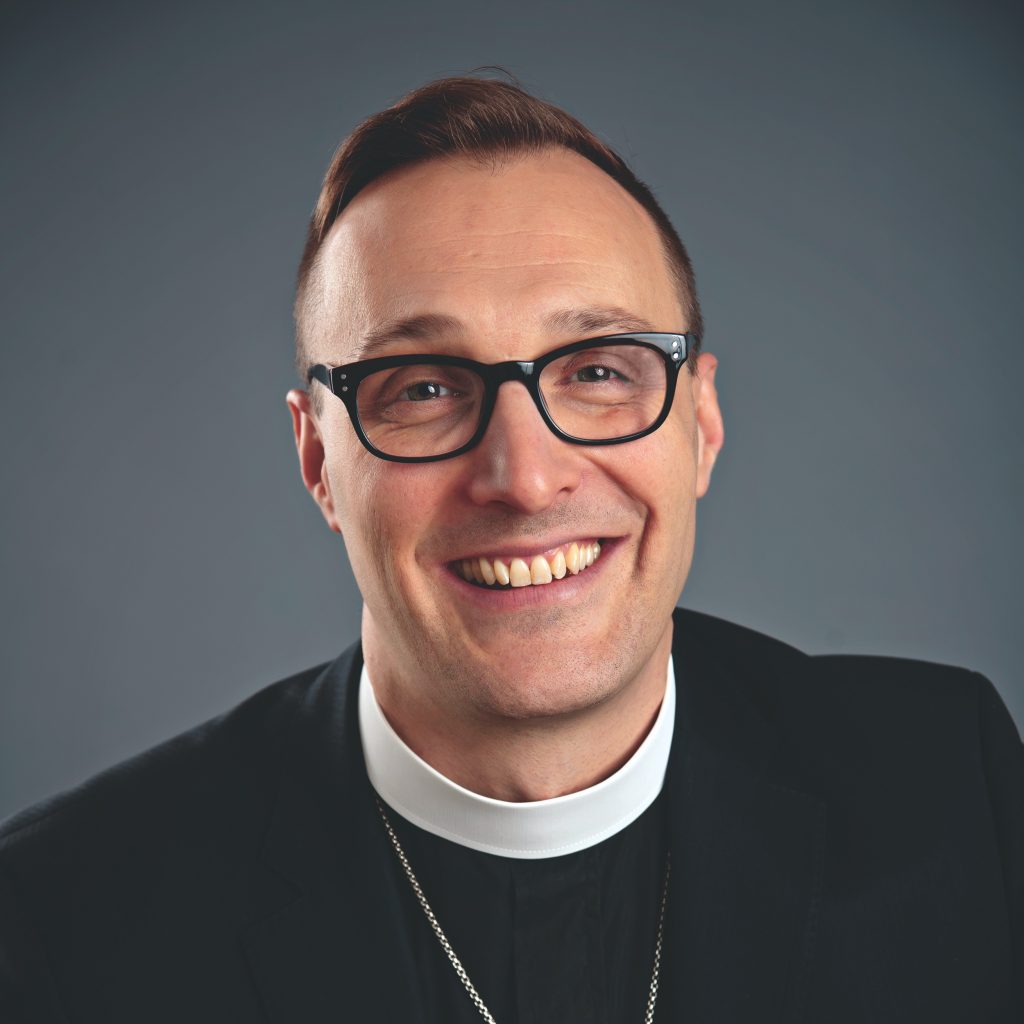
Rev. David Haberstock is Lutheran Church–Canada’s Central Regional Pastor.
 LCC Facebook
 LCC Instagram