
Holy Communion(s)
by Timothy Teuscher
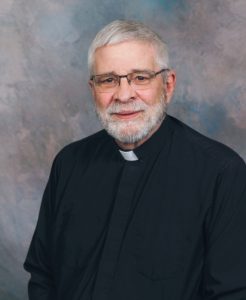 Our synodical constitution states the following regarding the primary duty of the president: to “use all means at his command to promote and maintain unity of doctrine and practice in all the regions” (Article X.3). This I have attempted to do over these past eight years in part by means of the President’s Column in our Canadian Lutheran periodical.
Now, at our recent synod convention, one of the essayists addressed the various ways in which the Greek word koinonia is used in the New Testament, and which is translated as ‘communion,’ ‘fellowship,’ ‘a participation in or with,’ ‘a coming together,’ and the like. Hence the theme of our convention: “Together One.” In this my last column as president, I would like to unfold the various communions that take place in Holy Communion—themes reflected in the hymns in our Lutheran Service Book.
In the first place, there is the communion or coming together of the body and blood of the crucified, risen, and ascended Lord with the earthly elements of bread and wine. So we hear Jesus’ words of institution proclaimed over the bread and the wine by the pastor in the Service of the Sacrament: “This is My body… This cup is the new testament in My blood” (LSB 162). St. Paul puts it this way: “The cup of blessing that we bless, is it not a participation in the blood of Christ? The bread that we break, is it not a participation in the body of Christ?” (1 Corinthians 10:16). And so we sing: “We eat this bread and drink this cup, Your precious Word believing That Your true body and Your blood Our lips are here receiving” (LSB 622:4).
Second, there is the communion or coming together of Jesus’ body and blood with the individual who eats of the bread and drinks of the cup. So the pastor says in the words of distribution: “Take, eat; the true body of Christ…. Take, drink; the true blood of Christ” (LSB 199). And we sing: “With Thee, Lord, I am now united; I live in Thee and Thou in me” (LSB 619:2).
The body and blood of the Lord are the holy things that are given to the communicants in the bread and wine in order to make them a communion of holy ones and thereby binds them to the unity and fellowship of Christ’s body, the Church, so that heaven and earth become one Holy Communion.
– John Chrysostom
In our individualistic society, however, that’s sadly where it begins and ends for many. You know: ‘It’s just between me and Jesus.’ But not so, for such leads to a third communion in Holy Communion—that is, the communion of all who together eat and drink of our Lord’s body and blood. St. Paul puts it clearly: “We who are many are one body, for we all partake of the one bread” (1 Corinthians 10:17). And so we sing: “One bread, one cup, one body, we, Rejoicing in our unity, Proclaim Your love until You come To bring Your scattered loved ones home” (LSB 623:4).
Fourth, there is also the communion of those who partake of the Sacrament with all those with whom we are in fellowship, be they in other congregations in our synod or in our partner churches around the world. The apostle Paul speaks of this when addressing matters pertaining to disorderly worship and abuses concerning the Lord’s Supper that had arisen in the church in Corinth, reminding them with these words: “as in all the churches of the saints” (1 Corinthians 14:3). The Lutheran Study Bible explains it this way: “The sacramental body ‘bodies’ together the ecclesiastical ‘body’” (p. 1965). This truth is especially significant and comforting for members of small and isolated congregations. Even if only a few people are physically gathered together, at the Lord’s Table they are thereby joined with all those in our congregations who are doing the same. So the hymn expresses it: “Elect from every nation, Yet one o’er all the earth; Her charter of salvation: One Lord, one faith, one birth. One holy name she blesses, Partakes one holy food” (LSB 644:2).
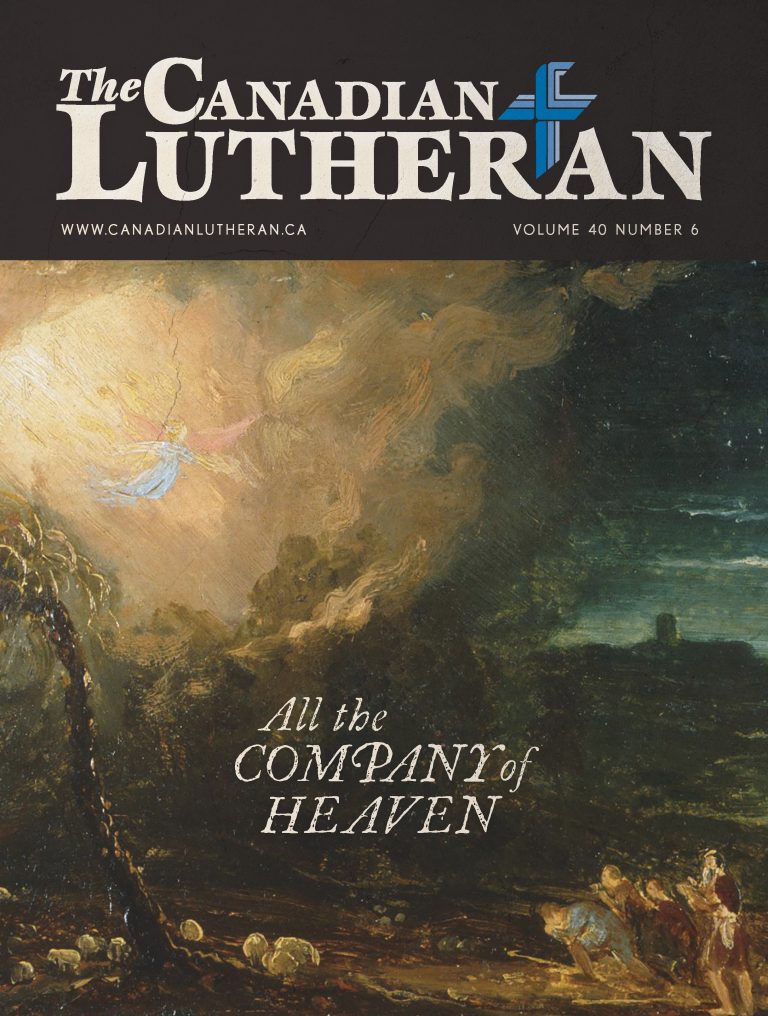
Fifth, there is also the communion or coming together of those who partake of the Sacrament here on earth with the church in heaven. The book of Hebrews expresses it this way: “But you have come to Mount Zion and to the city of the living God, the heavenly Jerusalem, and to innumerable angels in festal gathering, and to the assembly of the firstborn who are enrolled in heaven, and to God, the judge of all, and to the spirits of the righteous made perfect, and to Jesus, the mediator of a new covenant, and to the sprinkled blood that speaks a better word than the blood of Abel” (Hebrews 12:22-24). Notice the words: “you have come to Mount Zion”; not “you will come.” This is why pastors in the Proper Preface at the beginning of the Service of the Sacrament proclaim those familiar words: “Therefore with angels and archangels and with all the company of heaven we laud and magnify Your glorious name” (LSB Altar Book 199). The congregation then sings that ancient hymn called the Sanctus (Latin for “holy”), which is derived from Isaiah’s vision of the worship in heaven by the angels (Isaiah 6:3) and the worship on earth by the crowds when Jesus rode into Jerusalem on Palm Sunday (Matthew 21:9).
Think about that. The closest we can come to deceased loved ones who have departed this world in the faith is at the communion rail… something that has become very personal for me over these past few months since the death of my wife. So the hymn expresses it: “This sacrament God gives us Binds us in unity, Joins earth with heav’n beyond us, Time with eternity” (LSB 639:3).
In summary, then, let me paraphrase the early church father John Chrysostom: “The body and blood of the Lord are the holy things that are given to the communicants in the bread and wine in order to make them a communion of holy ones and thereby binds them to the unity and fellowship of Christ’s body, the Church, so that heaven and earth become one Holy Communion.” And that is really being ‘Together One.’
Rev. Dr. Timothy Teuscher is President of Lutheran Church–Canada.
 LCC Facebook
 LCC Instagram