




LCC Raises Concerns About New CAF Policy on Spiritual Reflections
National—Lutheran Church–Canada (LCC) is raising concerns about a new Canadian Armed Forces (CAF) policy governing spiritual reflections at official military ceremonies and other public or semi-public events.
Issued July 29, 2026, Canadian Armed Forces Military Personnel Instructions 03/26 – Spiritual Reflections in Military Settings directs CAF members, including chaplains acting in their official capacity, to provide inclusive spiritual reflections rather than religiously specific prayer at specified official events.
The reflections may address themes such as meaning, purpose, gratitude, remembrance, hope, and integrity, but may not include words, actions, or symbols specific to a particular spiritual faith tradition, including references to God or the divine.
The CAF says the policy is intended to respect freedom of conscience and religion and maintain religious neutrality within a diverse military community.
LCC acknowledges these objectives but is concerned about whether neutrality requires the complete removal of explicitly religious expression from chaplain-led reflections.
Prayer and Spiritual Reflection
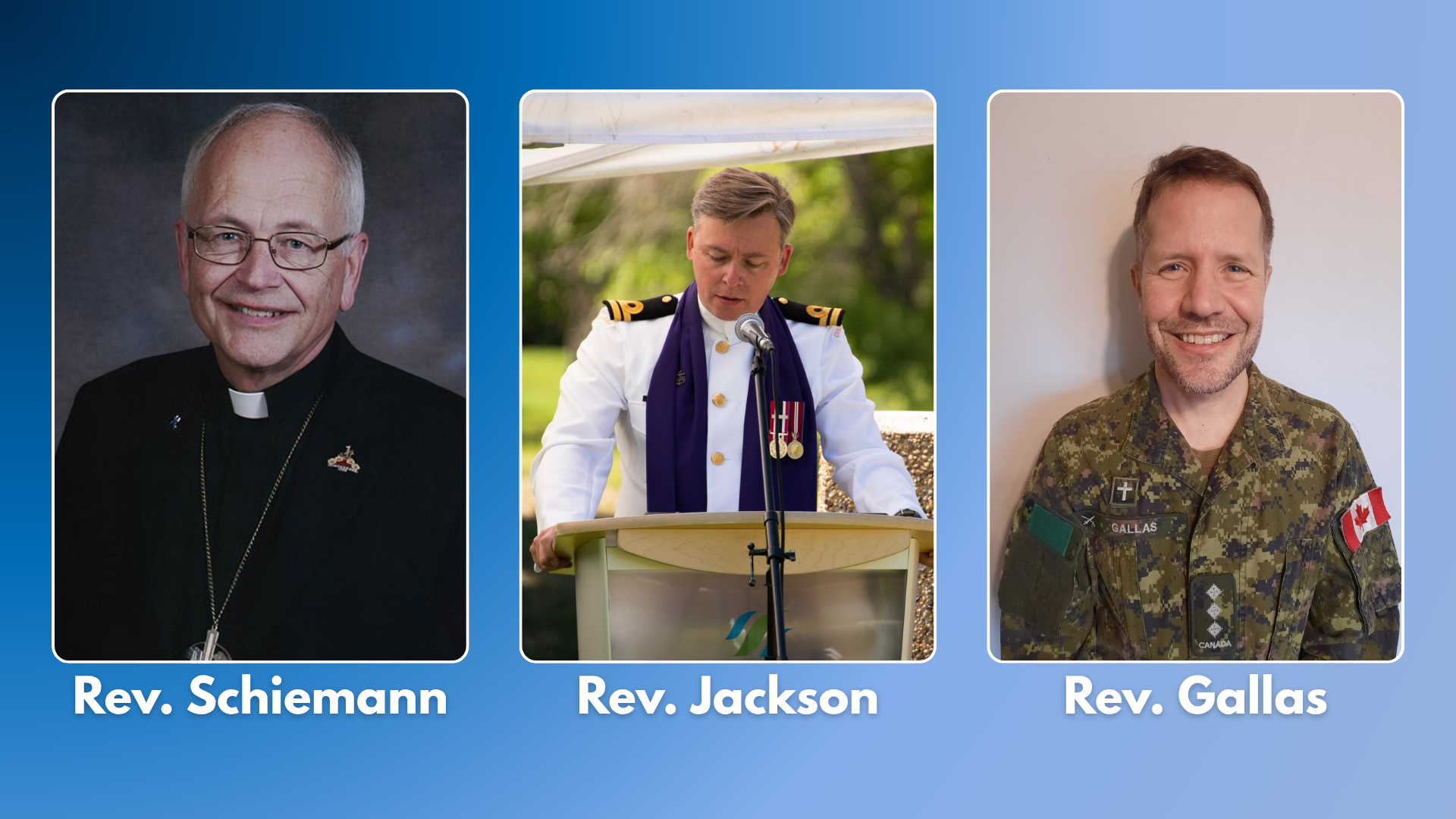
Rev. Donald Schiemann, LCC’s representative on the Interfaith Committee on Canadian Military Chaplaincy (ICCMC), explains the distinction between a ‘spiritual reflection’ and ‘a chaplain prayer’, pulling from material provided by the Chaplain General’s Office, which cites that “the heart of a meaningful reflection remains grounded in compassion, gratitude, courage, and hope—values that transcend individual belief systems. Often, creating inclusive reflections requires only small, thoughtful shifts in language and tone.” So . . .
Instead of: “Dear Lord, thank you for your blessings . . .” Chaplains are urged to try “Let us be grateful for our good fortune . . .”
And instead of: “Oh God, we pray for your protection over our deploying teammates . . .” they should try: “We hold close in our thoughts those preparing to deploy, and wish them strength, safety . . .”
However, the general sentiment among LCC’s chaplains is that prayer is more than an inspirational address. It is an expression of the faith and pastoral vocation for which the chaplain has been appointed.
“For a Lutheran chaplain, concepts such as hope, meaning, suffering, service, and spiritual well-being are inseparable from faith in God,” Rev. Don Schiemann, LCC’s representative on the Interfaith Committee on Canadian Military Chaplaincy (ICCMC).
LCC therefore questions whether requiring chaplains to remove explicit reference to God from this aspect of their ministry adequately respects religious freedom and conscience.
A central distinction for LCC is between requiring someone to pray and permitting a chaplain to pray.
Under the previous approach, a chaplain could identify a prayer as arising from the chaplain’s own faith tradition and acknowledge that those present could participate according to their own beliefs, pray privately, reflect, or remain silent.
The new policy removes this option from specified official ceremonies.
What about Saguenay?
The CAF cites the Supreme Court of Canada’s 2015 Mouvement laïque québécois v. Saguenay (City) decision in its approach to religious neutrality.
The Court held that the state must not profess, adopt, or favour one belief to the exclusion of others. LCC recognizes this principle. However, Saguenay concerned prayer at municipal council meetings and did not directly address military chaplaincy or voluntary chaplain-led prayer at military ceremonies.
LCC therefore believes the application of religious neutrality in the military chaplaincy context warrants further consideration.
The policy itself permits some religious or spiritual expression in official settings. References to God remain in the Royal and National Anthems based on historical and cultural continuity, while Indigenous spiritual and cultural practices may be included in appropriate circumstances without requiring participation.
“LCC recognizes that these circumstances are not identical to chaplain-led prayer. However, they raise a question about whether religious expression can be accommodated without compelling participation,” President David Haberstock.
What is LCC asking for?
LCC is calling for a review of CAFMPI 03/26 and consideration of an alternative approach: a brief chaplain-led prayer accompanied by a clear statement that it is offered according to the chaplain’s own faith tradition and that participation is entirely voluntary.
LCC is also calling for military chaplains to be supported in carrying out their pastoral responsibilities according to conscience and faith.
The organization is mindful of the unanimous November 8, 2024, House of Commons motion concerning the right of military chaplains to offer prayers in their denominations in public spaces, including in connection with Remembrance Day.
LCC is asking whether genuine neutrality should make room for both religious belief and nonbelief while protecting the conscience and pastoral vocation of military chaplains. Therefore, LCC is asking that this new policy be rescinded.
God keep our land glorious and free!
 LCC Facebook
 LCC Instagram