





With Fearless Hearts! Being Lutheran Today
by Murray Keith
On October 31, the church observes and celebrates Reformation Day. It is the anniversary of when Martin Luther posted his Ninety-Five Theses to the door of the Castle Church in Wittenberg, Germany, in 1517. This event is seen as one of the key moments that sparked the Reformation. As we commemorate this important time in our Church history, it is good to reflect on what it means to be a Lutheran today in 2026.
For with the heart one believes and is justified, and with the mouth one confesses and is saved.
(Romans 10:10)
What does it mean to be a Lutheran? It is helpful first to have some clarity on this question before considering what it means to be a Lutheran in our time. Most importantly, being a Lutheran means being a Christian. A Christian is someone who, by God’s grace, by the power and work of the Holy Spirit, believes in and confesses Jesus Christ to be the Saviour of the world. While that answer might sound simple and easy—it’s not. There are many aspects to consider when we think about Christianity, and there can be significant differences between Christian denominations in how they approach these questions. Who is God? Who is Jesus Christ? What is grace? How is the Holy Spirit active in our lives? How are we saved? How are we to live? How we answer these questions matters. We learn in Romans 10:10: “For with the heart one believes and is justified, and with the mouth one confesses and is saved.” What we believe and confess is vitally important.
For Christians who are members of Lutheran Church–Canada (and other confessional Lutheran church bodies around the world), being a Lutheran means that we believe, teach, and confess the truths of God’s Word as they are summarized in the Lutheran Confessions. The Lutheran Confessions are a set of writings published in 1580 as the Book of Concord, which we believe to be a faithful exposition of Holy Scripture. When a pastor is ordained in Lutheran Church–Canada, he promises that he will perform the duties of his office in accordance with the Lutheran Confessions. When members are confirmed in Lutheran Church–Canada they are asked if they confess the doctrine of the Evangelical Lutheran Church, as they have learned to know it from the Small Catechism, to be faithful and true. Being a Lutheran describes one who believes the truths of God’s Word as they are correctly taught in the Book of Concord. The Lutheran Confessions are essential for what it means to be a Lutheran because they confess the Gospel of Jesus Christ.
In 1 Corinthians 6:11, St. Paul teaches: “But you were washed, you were sanctified, you were justified in the name of the Lord Jesus Christ and by the Spirit of our God.” Being a Lutheran means much more than just committing to a set of doctrinal statements about God’s Word. It also involves being transformed by that Word. In the Large Catechism, Maritn Luther teaches: “Whenever God’s Word is taught, preached, heard, read, or meditated upon, then the person, day, and work are sanctified. This is not because of the outward work, but because of the Word, which makes saints of us all” (I 92). God’s Word is living and active and creates the faith that justifies us (i.e., declares us righteous) before God (Romans 10:17). The Holy Spirit, through the means of grace (Word and Sacraments), works in us a saving faith which personally receives what Christ has done for us. That is, a faith which believes that: through His life, Jesus satisfied God’s demand for perfect obedience; through His sacrificial death, Jesus took upon Himself God’s wrath and atoned for the sins of the world; and, through His resurrection, Christ has opened the eternal kingdom of heaven to all who believe, including you and me.
Article IV of the Augsburg Confession in the Book of Concord explains the doctrine of justification in this way:
“Our churches teach that people cannot be justified before God by their own strength, merits, or works. People are freely justified for Christ’s sake through faith, when they believe that they are received into favour and that their sins are forgiven for Christ’s sake. By His death, Christ made satisfaction for our sins. God counts this faith for righteousness in His sight.”
This teaching has become known as the article upon which the Church either stands or falls. It’s that important. It confesses that we cannot merit God’s favour by our obedience, or offer sacrifices to pay for our sins, or do anything else that will justify us before God. However, what we are unable to do for ourselves, Christ has done for us. This is summed up in three of what we call the Reformation Solas (“sola” is a Latin word meaning “alone”): Grace Alone. Faith Alone. Christ Alone. These are core Lutheran teachings and foundational to what it means to be Lutheran, because it is through Christ and Him alone that we are forgiven and saved. But God’s goodness doesn’t stop there. In Christ we are not only justified, we are also sanctified (made holy).
On the heels of Article IV on Justification in the Augsburg Confession comes Article VI on New Obedience. That article states:
“Our churches teach that this faith is bound to bring forth good fruit. It is necessary to do good works commanded by God, because of God’s will. We should not rely on those works to merit justification before God. The forgiveness of sins and justification is received through faith.”
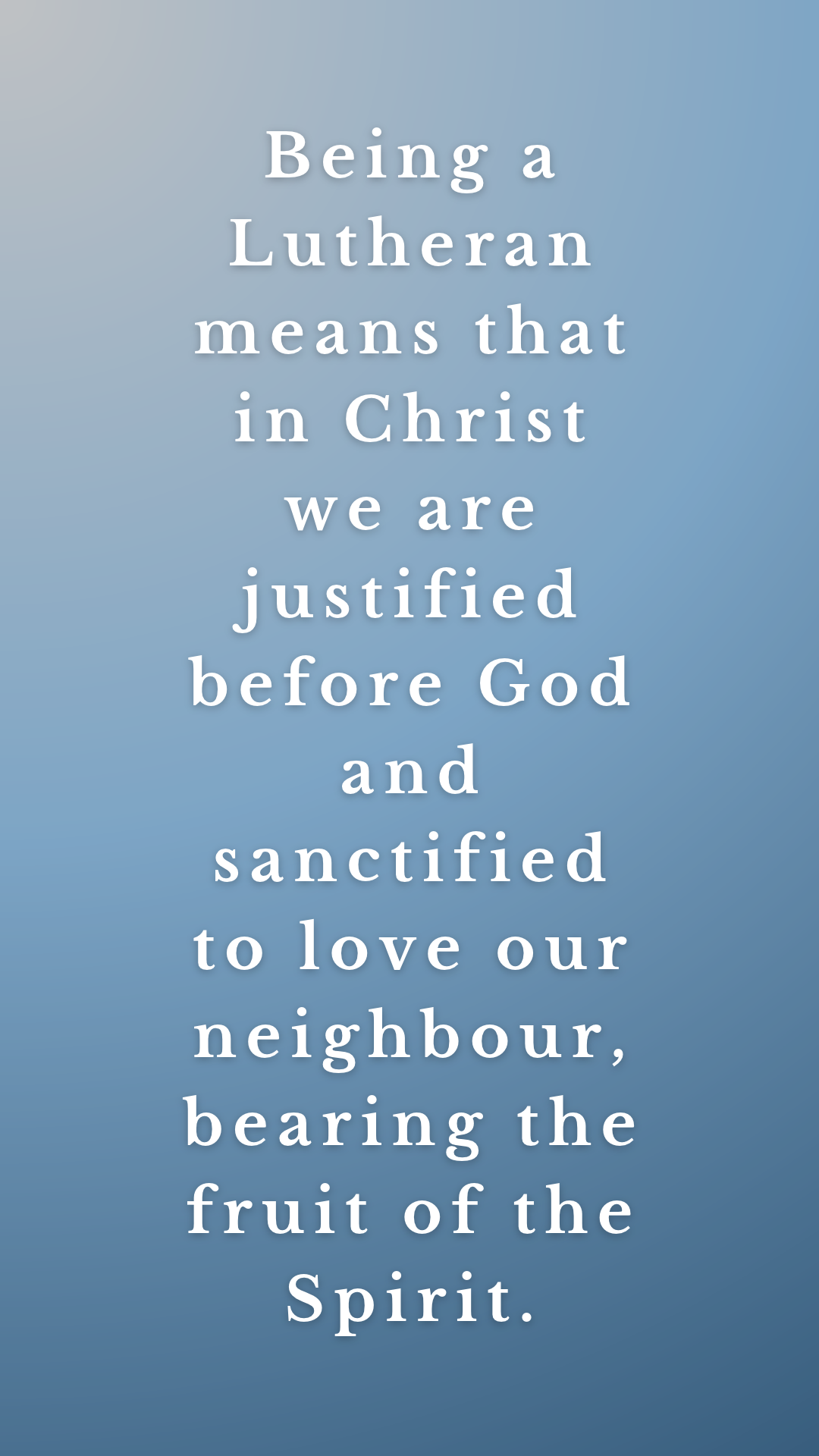
Here we learn that the faith given by the Holy Spirit not only justifies, it also bears the fruit of good works. In Ephesians 2:10, St. Paul teaches: “For we are His workmanship, created in Christ Jesus for good works, which God prepared beforehand, that we should walk in them.” He also teaches in Galatians 5:22-23 that the fruit of the Spirit is “love, joy, peace, patience, kindness, goodness, faithfulness, gentleness, and self-control.” Being a Lutheran means that in Christ we are justified before God and sanctified to love our neighbour, bearing the fruit of the Spirit.
So what does it mean to be a Lutheran today? It means that we boldly believe and confess the truths of God’s Word as taught in the Lutheran Confessions. We live in peace and joy, knowing that in Christ we are justified before God. In Christ our eternal salvation is secure. There is nothing to fear. We are sanctified in Christ and have been equipped by the Holy Spirit to love our neighbour, even our enemies. We love those who disagree with us, even those who persecute us for what we believe, teach, and confess. St. Peter encourages us: “But even if you should suffer for righteousness’ sake, you will be blessed. Have no fear of them, nor be troubled, but in your hearts honour Christ the Lord as holy, always being prepared to make a defense to anyone who asks you for a reason for the hope that is in you; yet do it with gentleness and respect” (1 Peter 3:13-15).
Lutherans living today can take courage from these last words written in the Book of Concord:
“Therefore, it is our intent to give witness before God and all Christendom, among those who are alive today and those who will come after us, that the explanation here set forth regarding all the controversial articles of faith which we have addressed and explained—and no other explanation—is our teaching, faith, and confession. In it we shall appear before the judgment throne of Jesus Christ, by God’s grace, with fearless hearts and thus give account of our faith, and we will neither secretly nor publicly speak or write anything contrary to it. Instead, on the strength of God’s grace, we intend to abide by this confession” (FC SD XII 40).
Rev. Murray Keith is Pastor of St. Paul’s Lutheran Church (Saskatoon, Saskatchewan).
 LCC Facebook
 LCC Instagram