




A Lutheran Presence at Canada’s Edge
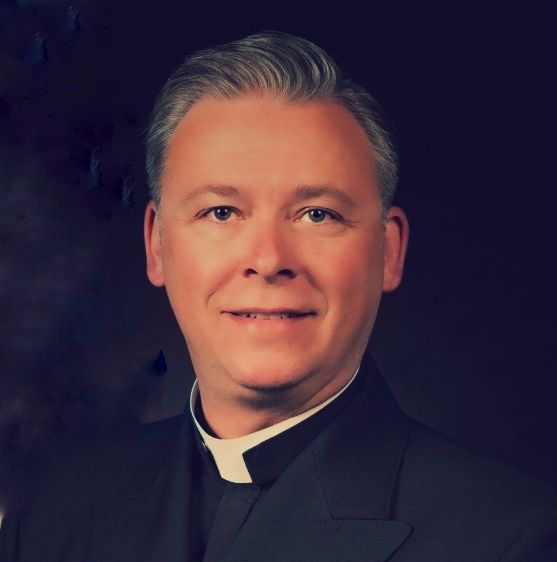 Halifax, NS—In an earlier visit to Halifax, LCC sat with Padre David Jackson for an interview. What was clear based on this exchange and observation is that in Nova Scotia, Lutheran Church–Canada’s presence is small, but its witness is significant.
For Padre Jackson, a Canadian Armed Forces chaplain who has served in the Halifax area on two separate postings, the ministry of the local LCC congregation has offered a firsthand look at both the challenges and opportunities of maintaining a Lutheran presence in Atlantic Canada.
The congregation is unusual in its structure. It brings together three worshipping locations: Halifax, the Annapolis Valley, and Charlottetown, Prince Edward Island. The distances between them are considerable, with travel to the Valley taking approximately two to two and a half hours and the journey to Charlottetown taking three to three and a half hours.
For a congregation without a full-time pastor, those distances present a significant challenge.
“It’s kind of like three distinct little congregations all under one,” Padre Jackson explained. “Organized as one congregation.”
During the summer months, visiting LCC pastors have helped provide worship and pastoral ministry, sometimes incorporating the visit into a working holiday. But during the winter, the congregation’s more distant members can go extended periods without a pastoral visit.
The challenge is compounded by the ministry responsibilities of Rev. Jackson and fellow military chaplains who have helped provide services. As full-time military chaplains, their primary responsibilities are with the Canadian Armed Forces, including pastoral care and being available when members require assistance.
Serving a congregation on Sunday can effectively turn an already demanding workweek into seven consecutive days of work.
The situation is particularly challenging because military postings are unpredictable. Chaplains can be reassigned with relatively little notice, making it difficult to establish long-term arrangements for congregational ministry.
Yet despite these challenges, there are signs of growth.
A young local man has become involved in the congregation and went through confirmation. A Brazilian family who recently moved to the area and already identified as Lutheran has also begun attending. On some Sundays, the Halifax gathering can be quite full.
And the opportunity extends beyond those already connected to the congregation.
A Lutheran Witness
Lutheranism has a long history in Nova Scotia, although much of that history is not immediately visible today.
Jackson pointed to Halifax’s historic “Little Dutch Church”—more accurately, the Little Deutsche Church—as a reminder of the province’s early German Lutheran presence. The congregation dates back to the 1700s, but over time, as German-speaking Lutherans became English speakers, the congregation was eventually absorbed into the Anglican Church.
Today, Lutheranism is not a strong presence in the Maritimes. Other Lutheran bodies have congregations in Halifax, but none associating with LCC. That makes the congregation’s ministry particularly important.
“We’re the only ones presenting our theology from a Lutheran perspective,” Padre Jackson said, emphasizing the opportunity to proclaim, “the gospel of justification by faith and the Word and Sacrament ministry.”
For Padre Jackson, that makes the congregation more than a group seeking to maintain its own existence. It is also a Lutheran witness in a part of the country where many people may have little familiarity with Lutheran teaching.
“Without us here, that presence isn’t going to exist,” he said.
More Than a Congregation
The geographical and pastoral challenges mean that the congregation can sometimes feel less like a conventional parish and more like a mission.
Padre Jackson described the three locations as ‘very disjointed’ when regular pastoral ministry is absent. A pastor who can travel among the preaching stations does more than lead worship: pastoral presence helps connect the three communities and reminds them that they belong to one church.
“Without a pastor, really it’s a mission,” Jackson said. “We were constituted when Pastor Smith was here. But in reality, this group is really more of a mission group, even though we technically are a congregation.”
That mission extends beyond the congregation’s existing members. A regular pastor could provide consistent pastoral care, strengthen relationships among the three locations, and create opportunities to engage the wider community.
For a small Lutheran presence in a region where the faith is not widely recognized, pastoral ministry can therefore have an impact that reaches well beyond Sunday morning.
Pray for the Maritimes
The story of LCC’s congregation in Halifax is a reminder that the Church’s ministry does not look the same everywhere.
Some congregations are large and centrally located. Others are spread across hundreds of kilometres, serving communities where Lutheranism is scarcely known. Yet each congregation remains a place where Christ’s Word is proclaimed, and His gifts are delivered to His people.
The Lutheran presence in Nova Scotia and Prince Edward Island may be small, but it represents an opportunity to proclaim the Gospel in a region where that witness is needed.
As LCC considers the ministry needs of congregations across the country, the congregation serving Halifax, the Annapolis Valley, and Charlottetown invites the prayers of fellow Christians throughout the synod—for faithful pastoral care, for strengthened unity among its three locations, for opportunities to reach its communities, and for the continued proclamation of Christ and His Gospel at Canada’s eastern edge.
Karen Gallas shares how a congregation in Halifax continues to thrive despite being small.
 LCC Facebook
 LCC Instagram