

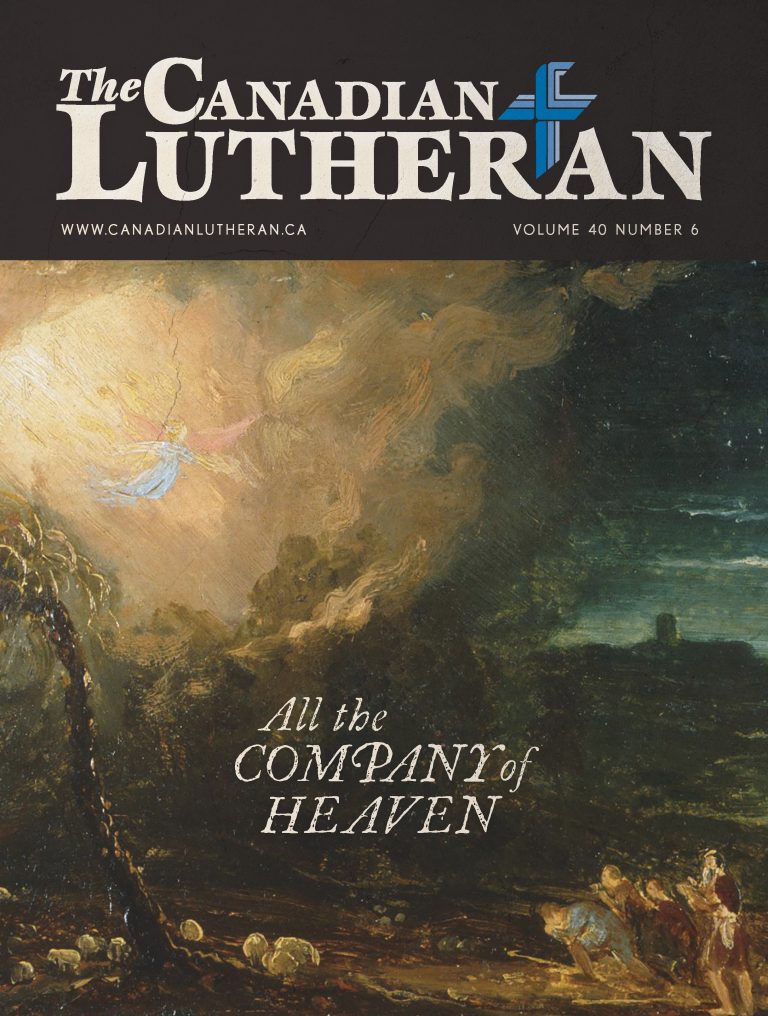




A Place for You

by William Mundt
He spoke calmly, but still you could see anxiety rising in their eyes. Three short years earlier He interrupted their lives and their livelihood and now He was talking about going away—without them. “In my Father’s house are many rooms. If it were not so, would I have told you that I go to prepare a place for you?…. And you know the way to where I am going” (John 14:2, 4). Thomas spoke what they were all thinking: “Lord, we do not know where you are going. How can we know the way?” (v. 5). Anxious eyes became confused ones as He invited them again to follow Him. But again, they did not understand where exactly where He was going or what such following entailed.
Our thoughts become a bit cloudy and confused too when talking about or seeking answers to the question, “And after death, what?” And, like those first disciples, Jesus comforts us with the same promise: “When I go and prepare a place for you, I will come again and will take you to Myself, that where I am you may be also” (v. 2). The separation may be temporary, but the promise is eternal. In the meantime, lest there be any doubt, “the Holy Spirit, whom the Father will send in My name, He will teach you all things and bring to your remembrance all that I have said to you. Peace I leave with you; My peace I give to you” (vv. 26-7). Peace and comfort are what Jesus had in mind when He made this promise, saying, in essence, “Do not be afraid, there is a place for you.” “I will never leave you nor forsake you” (Hebrews 13:5).
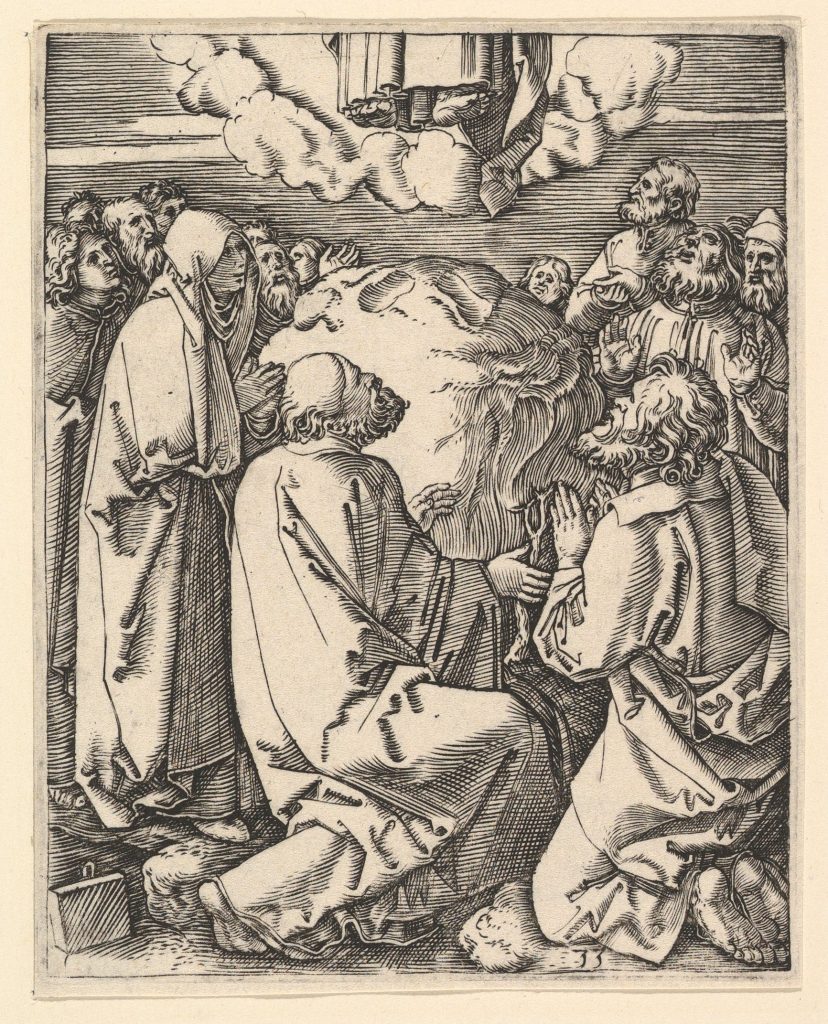
The Ascension of Christ into heaven, after Dürer, engraving by Marcantonio Raimondi (after Albrecht Dürer).
Almost all religions stress life after death, because God “has put eternity into man’s heart” (Ecclesiastes 3:11). What that looks like and how we get there varies. Most religions assert that good behaviour on earth brings great rewards in heaven. Others assert that God is too gracious and loving to exclude anyone from paradise. Still others assert God is so capricious we cannot discern His will; we must just hope He is in a good mood when He judges us.
The Bible stresses that the main ingredient of the life that awaits believers in Jesus Christ—and specifically in His substitutionary life, suffering, death and resurrection for us—is a beatific vision, that is seeing God face to face without fear (1 Corinthians 13:12). Believers may also look forward to a restoration of the divine image (lost in the fall), deliverance from all evil, divine rest, and joyful song and praise (those who cannot ‘carry a tune’ will finally learn!). Noteworthy is what is absent: “He will wipe away every tear from their eyes, and death shall be no more, neither shall there be mourning, nor crying, nor pain anymore, for the former things have passed away” (Revelation 21:4). Everything earthly will be replaced by something better—by something we cannot yet imagine.
“Are we there yet?” is a frequent, childlike question when travelling. Thinking about the destination may relieve some of the boredom of the time it takes to get there. “Think on these things,” God says: “In everything by prayer and supplication with thanksgiving let your requests be made known to God. And the peace of God, which surpasses all understanding, will guard your hearts and your minds in Christ Jesus. Finally, brothers, whatever is true, whatever is honourable, whatever is just, whatever is pure, whatever is lovely, whatever is commendable, if there is any excellence, if there is anything worthy of praise, think about these things” (Philippians 4:6-8).
Preoccupation with the things of this world, that we mostly cannot control anyway, robs us of any comfort Christ offers. That is why He says: “Do not be anxious about your life, what you will eat or what you will drink, nor about your body, what you will put on. Is not life more than food, and the body more than clothing?…. But seek first the kingdom of God and His righteousness, and all these things will be added to you” (Matthew 6:25, 31).
 St. Paul learned this simple but profound lesson too: “For to me to live is Christ, and to die is gain… I am hard pressed between the two. My desire is to depart and be with Christ, for that is far better. But to remain in the flesh is more necessary on your account…. Only let your manner of life be worthy of the Gospel of Christ, so that whether I come and see you or am absent, I may hear of you that you are standing firm in one spirit, with one mind striving side by side for the faith of the Gospel” (Philippians 1:21, 23-4, 27).
Zachariah foretold it all, in response to the general amazement at the birth of John the Baptizer when people asked: “What then will this child be?” (Luke 1:66). And the response? “Blessed be the Lord God of Israel, for He has visited and redeemed His people and has raised up a horn of salvation for us in the house of His servant David, as He spoke by the mouth of His holy prophets from of old, that we should be saved from our enemies and from the hand of all who hate us; to show the mercy promised to our fathers and to remember His holy covenant, the oath that He swore to our father Abraham, to grant us that we, being delivered from the hand of our enemies, might serve Him without fear, in holiness and righteousness before Him all our days. And you, child, will be called the prophet of the Most High; for you will go before the Lord to prepare His ways, to give knowledge of salvation to His people in the forgiveness of their sins, because of the tender mercy of our God, whereby the sunrise shall visit us from on high to give light to those who sit in darkness and in the shadow of death, to guide our feet into the way of peace” (vv. 68-79).
That question—“What then will this child be?”—may have been asked about you and me too. It is always amazing what and whom God uses to carry out His will, to proclaim the Gospel, to represent Him in love to the neighbour, to provide comfort and encouragement in time of need. Ever since the fall into sin, this world demands a lot of us—and even more so of Christians. But we have this promise—signed and sealed in the life, suffering, death, and resurrection of Jesus: “For those who love God all things work together for good, for those who are called according to His purpose…. He who did not spare His own Son but gave Him up for us all, how will He not also with Him graciously give us all things?…. Who shall separate us from the love of Christ? Shall tribulation, or distress, or persecution, or famine, or nakedness, or danger, or sword?…. For I am sure that neither death nor life, nor angels nor rulers, nor things present nor things to come, nor powers, nor height nor depth, nor anything else in all creation, will be able to separate us from the love of God in Christ Jesus our Lord” (Romans 8:28, 32, 35, 38).
—————
Rev. Dr. William Mundt (Chilliwack, B.C.) is Professor Emeritus of Concordia Lutheran Theological Seminary (St. Catharines, Ontario).
 LCC Facebook
 LCC Instagram