





How To Shrive Yourself

by Timothy Teuscher
How do you shrive yourself? It’s a fitting topic to consider during Lent. But what does the word ‘shrive’ even mean? It comes from an Old English word derived from the Latin scribere—that is, ‘to write.’ It refers to the writing down of our sins—if not on paper, then in heart and mind—especially on the day prior to Ash Wednesday, which is thus called “Shrove Tuesday.”
In today’s society, even those who couldn’t care less about penitence and Lent might still “shrive” by eating pancakes and sausages the day before Ash Wednesday. Some shrive by receiving ashes on their foreheads in accordance with the words of Job of old who lamented: “I despise myself and repent in dust and ashes” (42:6). And a few will even shrive by fasting and giving something up for Lent.
All this can indeed be beneficial. As the catechism puts it, “Fasting and bodily preparation are certainly fine outward training” (SC VI). Fasting reminds us that our spiritual hunger and thirst needs to be satisfied and quenched with God’s Word and the Holy Supper of Jesus’ body and blood.
At the same time, however, fasting can be a dangerous thing. So Jesus says in the Gospel reading for Ash Wednesday: “When you fast, do not look gloomy like the hypocrites, for they disfigure their faces that their fasting may be seen by others” (Matthew 6:16). Or as God says through the prophet Joel: “Rend your hearts and not your garments” (2:13).
Why the warning? Well, it can be easy to shrive by merely showing an outward expression of repentance—a black mark on your forehead, perhaps—rather than confessing the black mark on your heart. It’s easier to shrive by giving up desserts during Lent than by giving up this or that sin which lurks deep in our hearts, rearing its ugly head time and time again.
It’s even more dangerous to think that shriving in this outward manner—by giving alms to the poor, putting ashes on our foreheads, or eating pancakes on Shrove Tuesday—somehow makes us upright before God. It’s easy to compare our “righteousness” to all those people around us who are oblivious to Lent, who could care less about such spiritual disciplines, and who, to use the words of the Lenten hymn, “pass the cross unheeding, breathing no repentant vow” (LSB 423.2).
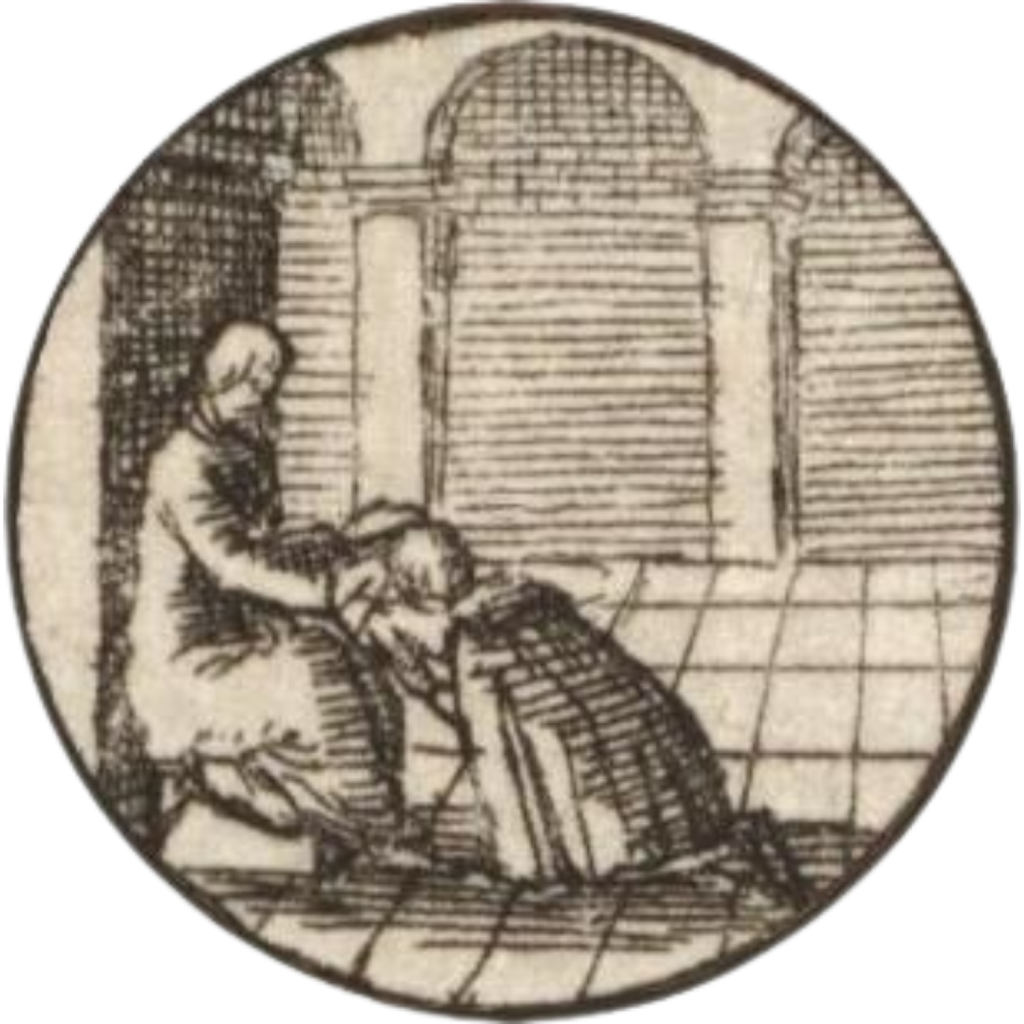
Wenceslas Hollar, Illustration of the Augsburg Confession (detail),etching, mid-17th century.
Martin Luther gives us better advice in a little pamphlet on what it truly means to shrive ourselves (LW 53.119-121). “What is confession?” he asks. And the answer? “Confession consists of two parts: one is that we confess our sins.” And “what sins ought we to confess?” He answers: “Here consider your calling according to the Ten Commandments… if you have been disobedient, unfaithful, slothful, angry, unchaste, or quarrelsome, if you have injured anyone by words or deeds, if you have stolen, neglected, or wasted aught, or done any other evil.”
For some people that’s as far as it goes (if it even goes that far anymore!). Others say that all you need to do is acknowledge that you are a sinner, pray a version of the Fifth Petition of the Lord’s Prayer (“Forgive us our trespasses”), and then God forgives you. But I could pray that prayer in private and frequently, and yet wait in vain to hear an answer from God.
No, this is only the first part of shriving, Luther says. The next goes like this: “Then the father confessor shall say: I, by the command of Jesus Christ our Lord, forgive thee all thy sins… Go in peace.” So the apostle Paul puts it in the epistle reading for Ash Wednesday: “We are ambassadors for Christ, God making His appeal through us. We implore you on behalf of Christ, be reconciled to God” (2 Corinthians 5:20). Yes, God makes His appeal to you and absolves you of sin—answering that Fifth Petition prayer of yours—through His ambassadors of Christ. In other words, through pastors. And this can happen in Private Confession, in the Absolution at the beginning of a Divine Service, or in those beautiful and comforting words he speaks when you kneel at the altar: “Take, drink; this is the true blood of our Lord and Saviour Jesus Christ, shed for the forgiveness of your sins” (LSB 199).
 That is what it means to shrive properly. It’s not about pancakes or alms or fasting, as valuable as those things might be. Instead, shriving is about repentance and forgiveness—confession and absolution. And this is central not only to Lent but to our entire Christian faith and life. That’s why Luther, a few years after writing the Small Catechism, inserted this little tract on shriving yourself into the Catechism (between the sacraments of baptism and the altar). As Luther says at the very beginning of the 95 Theses: “When our Lord and Master Jesus Christ said, ‘Repent,’ He willed the entire life of believers to be one of repentance.” Or, as we might say, “one of shriving.”
—————
Rev. Dr. Timothy Teuscher is President of Lutheran Church–Canada.
 LCC Facebook
 LCC Instagram