




That There May Be Fairness
by M.L. Smith
 St. Paul does not speak here of quotas or pressure, nor does he reduce stewardship to obligation or institutional survival. Instead, he speaks of life together, of the Church as a living body in which the gifts given to one are entrusted for the good of all. Fairness, for St. Paul, is not sameness. It is faithfulness lived out in love, shaped by Christ’s own self-giving.
I came to know the truth of these words personally as they took shape in Atlantic Canada. Lutherans there were scattered across vast distances—some in in cities, others in small towns and rural areas. Many were separated from consistent pastoral care; some had not had regular access to Word and Sacrament for years. Others gathered occasionally—in homes or rented spaces—holding fast to the faith they had received, even when the Church’s presence felt fragile.
These were not nominal Christians. They were faithful people devoted to our Confessions—families, seniors, newcomers, lifelong Lutherans—who loved Christ and His Church. Yet they lived with a quiet ache: the longing to gather more regularly, to be taught, to be shepherded, and to receive Christ’s gifts of grace. The need was real, and it could not be addressed by good intentions alone or from a distance. And so, the Church responded with a commitment to gather and shepherd her people.
I was called to serve as a circuit rider for the Maritimes, entrusted with the care of this scattered flock. That call itself was an act of stewardship; the ministry was made possible because congregations and individual donors across LCC chose to bear this work together. It was the Church’s confession that what God had given to some should be shared so that others would not be neglected. It was an expression of Paul’s vision: abundance supplying need.
That support allowed me to travel long hours on highways, ferries, and secondary roads to bring pastoral care where it was needed. It allowed me to preach and teach, baptize and catechize, hear confessions, absolve, visit the sick and grieving, and gather God’s people in the Divine Service.
Because of this stewardship, something remarkable happened: communal life began to take shape. Worshipping communities were strengthened in Halifax, the Annapolis Valley, and Charlottetown. Pastoral visits extended to Newfoundland. Through patience, prayer, and the perseverance of God’s people, these communities were formed into what would become LCC’s largest geographical parish: Saint Andrew’s Evangelical Lutheran Parish.
Four communities took root—Saint Andrew’s in the City, in the Valley, on the Island, and on the Rock. Each community reflected its own context, yet all were united in confession, liturgical life, and ministry and mission. This was the fruit of the generosity of people across the Church who believed this scattered flock mattered.
“Your abundance at the present time should supply their need, so that their abundance may supply your need, that there may be fairness.”
– 2 Corinthians 8:14
Nor did this stewardship flow in only one direction. What the wider Church gave in support was returned in ways that could not have been predicted. From this small parish, LCC has since received a pastor now serving faithfully in Regina. Two seminarians have come forward to prepare for the pastoral office. Two lay artists have been commissioned by the church. Strong lay leaders have emerged—men and women—who serve the church beyond their local communities.
Sacrificial stewardship produced fruit that now benefits the Church at large. This is the fairness Paul describes. The Church gives, and the Church receives. The body is strengthened as each part serves the other.
Whether through local ministry, domestic missions and ministry, or international service, the same pattern holds. God provides through His people so that His Church may be built up, pastors may be prepared, and the faithful may be gathered around Word and Sacrament. The work differs from place to place, but our shared life in Christ is the same.
Stewardship, then, is not an accessory to the Church’s mission, nor is it just a seasonal appeal. It is a confession of faith. It declares that all we have, comes from the Lord and is given for the life of His body. As we share what has been entrusted to us, we bear witness to Christ Himself—the One who did not hold back His abundance, but gave Himself fully for the life of the world.
And in that giving, the Church continues to discover that fairness is found in the faithful care of brothers and sisters in need, so that none are forgotten, none are left without the gifts of grace. And so the body of Christ is strengthened in love.
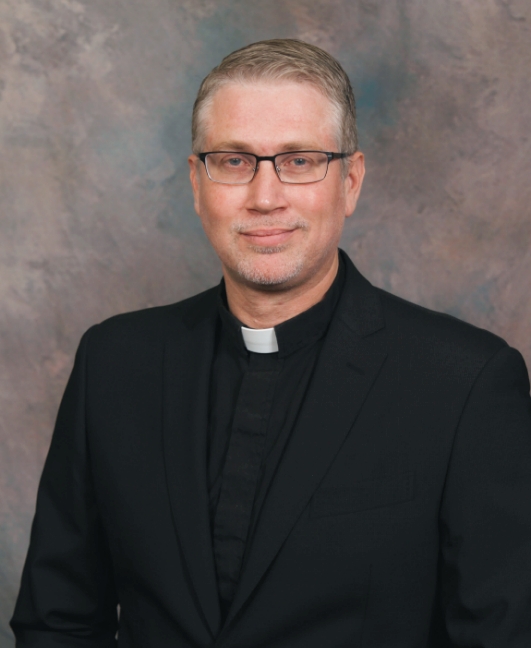
Rev. M.L. Smith is Lutheran Church–Canada’s Director of International Missions.
 LCC Facebook
 LCC Instagram