





Together for the Sake of the Gospel: Domestic Mission Discernment in LCC
 by Tasheney Francis
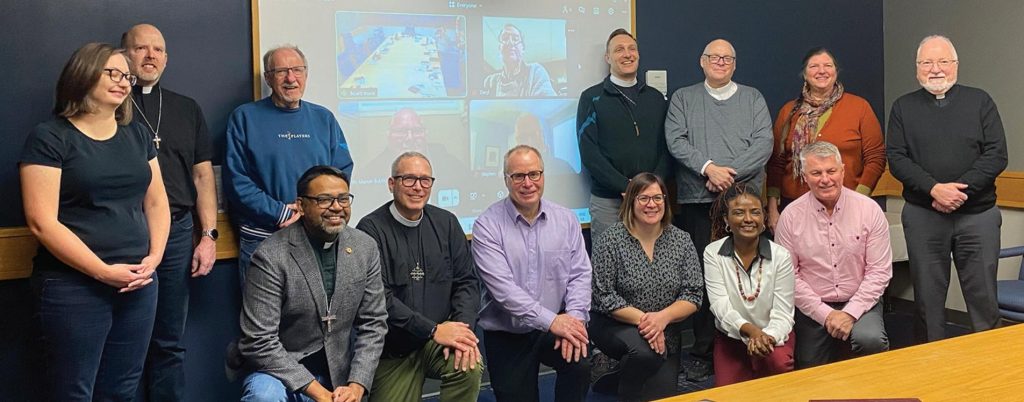
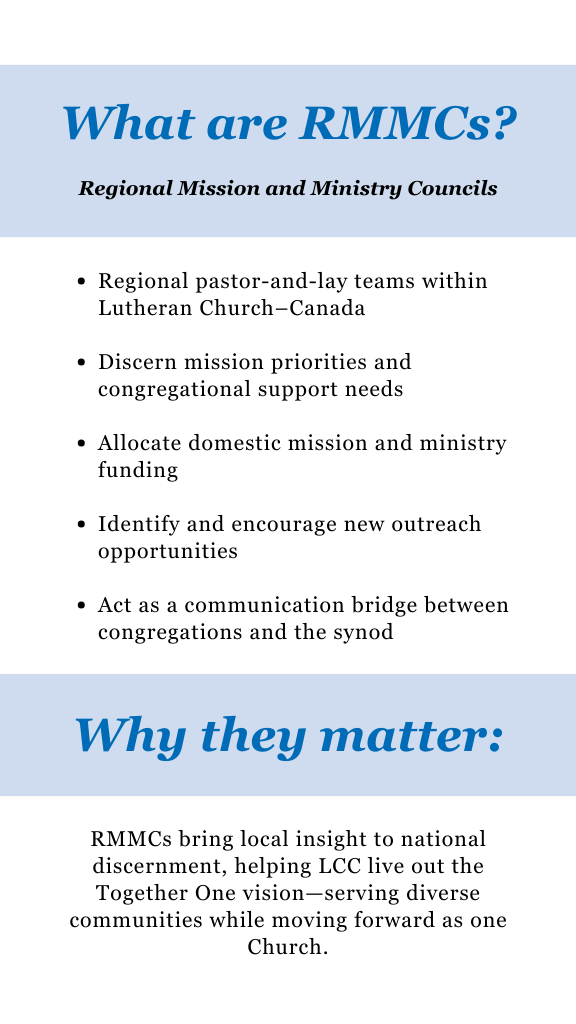
CANADA – Leaders from across Lutheran Church–Canada gathered in early January with a shared purpose: to discern together how best to steward resources for domestic mission and congregational support in the years ahead. The meeting, convened by the Regional Mission and Ministry Councils (RMMCs) and synodical leadership, reflected not only the complexity of funding decisions, but also a deeper commitment to the Together One vision—that the church in Canada moves forward not as isolated regions, but as one body in Christ.
“This gathering is not about issuing directives from Winnipeg,” said Rev. Jacob Quast, Director of Domestic Missions, in his opening remarks. “It is about coming together so that all voices are heard, priorities are discerned collectively, and we move forward within those shared priorities.”
A Shared Task, A Shared Responsibility
The immediate objective of the two-day meeting was practical and necessary: to allocate funding for domestic mission work in the upcoming LCC budget and to establish clearer quantitative and qualitative metrics to guide present and future decisions. Yet beneath those objectives lay a more foundational question: how does Lutheran Church–Canada faithfully care for existing congregations while also making room for new mission opportunities?
From the outset, participants were reminded to keep the bigger picture in view. While congregational support remains essential, there was broad agreement that domestic mission cannot be reduced to sustaining what already exists. One of the clearest areas of shared conviction was Indigenous ministry. Participants were careful to emphasize that this work is not a short-term initiative, but a long-term commitment rooted in invitation, presence, and trust.
“We are not going where we have not been asked,” leaders stressed. Relationships, particularly in parts of British Columbia and the Northwest, have developed over time, and communities have invited deeper pastoral presence and care. The ministry envisioned is focused not on rapid expansion, but on faithful accompaniment, grief support, and spiritual care—one of the emerging ministry opportunities, which along with new mission starts and outreach initiatives must also be part of the Church’s shared imagination.
Financial realities framed the discussion. Between 2022 and 2025, domestic missions funding totaled just over $3.4 million. Looking ahead, a best-case scenario tied to a successful campaign could see $5 million available over the next quadrennium, or approximately $1.25 million per year. For now, budgeting is being built around a mid-range projection of $1.1 million annually, with intentional space left for new opportunities that may arise.
Metrics That Tell the Whole Story
A significant portion of the meeting focused on refining how funding requests are evaluated. Participants acknowledged the value of quantitative measures—such as offerings, attendance, and financial sustainability—while also recognizing their limitations.
“Numbers alone don’t tell the whole story,” several speakers noted. Congregations with low income but high volunteer engagement, strong community presence, or ministry among newcomers may appear less viable on paper while remaining vibrant in lived reality. This tension led to robust discussion about balancing viability with vitality, and about how qualitative information can help tell the story behind the numbers.
Qualitative criteria—such as unique hardships, motivation and effort, and future prospects for self-sufficiency—were widely affirmed as essential. In many cases, these factors significantly reshaped prioritization. Participants emphasized that this kind of insight often comes not from forms alone, but through relationships: circuit counsellors, lay representatives, regional pastors, and RMMC members who know local contexts well. So, forms must be revised so the core of these stories can be captured.
The discussion highlighted a desire for greater structure without creating unnecessary burden. Ideas included guided narrative questions, opportunities for local presentations at the circuit level, and clearer links between qualitative and quantitative data. The goal is not bureaucracy, but transparency, consistency, and shared understanding.
Regional Voices, One Conversation
Regional presentations formed the heart of the gathering, offering concrete examples of how these principles play out on the ground.
In the West, requests reflected congregations that are often the sole Lutheran presence in vast or rural areas—places where losing a congregation would mean losing Word and Sacrament ministry across an entire region. From rural farming communities to language-specific ministries and outreach to the Deaf community, presenters stressed that these congregations are “irreplaceable,” even when small in number.
Eastern presentations highlighted long-standing needs across a geographically and culturally diverse region. Challenges ranged from pastoral vacancies and language ministries to sustaining presence in the Maritimes and Quebec. Speakers underscored the importance of communication, reconciliation in ministry relationships, and the need to support congregations not only financially but also through connection and collaboration.
Central Region presenters reflected on how quantitative and qualitative assessments sometimes led to different conclusions, reinforcing the need for both. Stories included multi-point parishes stretched thin, Indigenous outreach opportunities, partnerships across borders, and the pastoral and emotional care of those who have faithfully sustained congregations for decades.
Across all regions, difficult questions surfaced repeatedly: How do we plan for long-term sustainability? What does success look like in ministry without reducing it to metrics alone? How do we care for ‘grandmas and grandpas’ who have carried congregations faithfully, while also reaching the next generation and those who have drifted away?
Intention to Be Together
Throughout the meeting, one theme returned again and again: the importance of being together. There was strong consensus that transparency, shared narrative, and collective discernment are the solution. It was recognized that, after all, while we meet to divide funds across regions, domestic mission is one interconnected story across the synod.
The meeting concluded not with final answers, but with renewed clarity of purpose. Lutheran Church–Canada is seeking to steward resources responsibly, to communicate openly, and to act together—supporting existing congregations, cultivating new mission opportunities, and bearing witness to Christ across Canada.
As the Together One vision reminds us, the work in one place ripples outward—to neighbouring communities, across regions, and even beyond our borders. This gathering was one step in continuing that shared journey.
Dr. Tasheney Francis is Director of Communications of Lutheran Church–Canada.
 LCC Facebook
 LCC Instagram