



What Is Your Dearest Treasure?
 by Timothy Teuscher
Our synod’s ‘Together One’ campaign, which is in its initial stages, is intended to provide earthly treasures to support the preaching of God’s Word and administration of the Sacraments in all our congregations and missions, so that people now and in the future might receive the heavenly treasures of forgiveness, life, and salvation that have been won for us, as the Small Catechism puts it, “not with gold or silver, but with His holy, precious blood and with His innocent suffering and death” (SC I).
It is significant to note in this regard that our observance of the Reformation on October 31st is derived from that fall day in 1517 when Martin Luther posted his famous 95 Theses on the door of the Castle Church in Wittenberg, Germany. These, in effect, were a critique of the campaign being undertaken by the Roman Church of his day in order to, among other things, fund the rebuilding of the basilica of St. Peter’s in Rome which had fallen into disrepair.
Money for this purpose was raised through the selling of what was called ‘indulgences’—documents issued by the church for a price which supposedly shortened the time a person had to endure punishment in Purgatory in order to achieve the holiness necessary to stand in the presence of God in heaven. This teaching of Purgatory, however, is nowhere to be found in Scripture. If there was anyone who needed to undergo such purging, surely it would have been that thief on the cross who was crucified next to Jesus and who said to his partner in crime: “We are receiving the due reward for our deeds” (Luke 23:41). Turning to Jesus, he pleaded: “Remember me when You come into Your kingdom” (23:42). And how did Jesus respond? “Truly, I say to you, today you will be with Me in Paradise” (23:43).
Luther’s 95 Theses were provoked by the selling of such indulgences by the friar Johann Tetzel, whose sale pitch went along these lines: “You should know that all who confess and in penance put alms into the coffer according to the counsel of the confessor, will obtain complete remission of all their sins. Why are you then standing there? Run for the salvation of your souls!” And further: “Don’t you hear the voices of your wailing dead parents and others who say, ‘Have mercy upon me, have mercy upon me, because we are in severe punishment and pain. From this you could redeem us with a small alms and yet you do not want to do so.’” And then his most infamous line: “Whenever a coin in the coffer rings, another soul from purgatory springs.”
Two of the 95 Theses are especially applicable to us still today. First, Thesis 1 says: “When our Lord and Master Jesus Christ said, ‘Repent’ (Matthew 4:17), He willed the entire life of believers to be one of repentance.” In his Explanation of the 95 Theses, written a year later, Luther elaborates: “It is evident that this repentance or recovery of one’s senses should involve one’s whole life, according to the passage, ‘He who hates his soul in this life, preserves it for eternal life’ (Matthew 10:39). And again, ‘He who does not take his cross and follow Me, is not worthy of Me’ (Matthew 10:38)…. We pray throughout our whole life and we must pray ‘forgive us our debts’ (Matthew 6:12). Therefore, we repent throughout our whole life… for the debts for which we are commanded to pray are real and not be treated lightly; and we could not be saved unless they were remitted.” This is the reason, for instance, why at the beginning of our worship service we say these words Sunday after Sunday throughout our lives: “O almighty God, merciful Father, I, a poor, miserable sinner, confess unto You all my sins and iniquities with which I have ever offended You and justly deserved Your temporal and eternal punishment” (LSB 184).
 And second, in Thesis 62 we read these words: “The true treasure of the church is the most holy Gospel of the glory and grace of God.” Again, in commenting a year later on this thesis Luther says: “The Gospel of God is something which is not very well known to a large part of the church. Therefore I must speak of it at greater length. Christ has left nothing to the world except the Gospel. Also, He has handed down to those who have been called to be His servants no such things as talents or riches, in order to show by these terms which speak of temporal treasures that the Gospel is the true treasure…. Christ speaks of the Gospel as a treasure which is hidden in a field (Matthew 13:44). And because it is hidden, it is at the same time also neglected. Moreover, according to the apostle, the Gospel is a preaching of the incarnate Son of God, given to us without any merit on our part for salvation and peace (Romans 1:3-6). It is a word of salvation, a word of grace, a word of comfort, a word of joy, a voice of the bridegroom and the bride, a good word, a word of peace…. When the sinful conscience hears this sweet message, it comes to life again, shouts for joy, while leaping about full of confidence, and no longer fears death…. Therefore the true glory of God springs from this Gospel. At the same time we are taught that the Law is fulfilled not by our works but by the grace of God who pities us in Christ and that it shall be fulfilled not through works but through faith, not by anything we offer God, but by all we receive from Christ and partake of in Him.”
And that is our dearest and true treasure—a treasure we help share with others by and through the earthly treasures God has given us. So we sing in the hymn: “Lord, we pray that we, Your people Who Your gifts unnumbered claim, Through the sharing of Your blessings May bring glory to Your name” (LSB 782).
—————
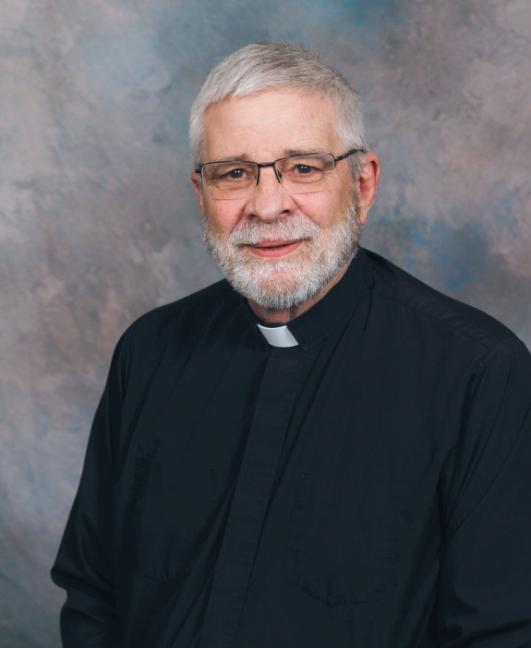
Rev. Dr. Timothy Teuscher is President of Lutheran Church–Canada.
 LCC Facebook
 LCC Instagram